We're featured in phpro – Interview with Andreas Nicklas
Categories
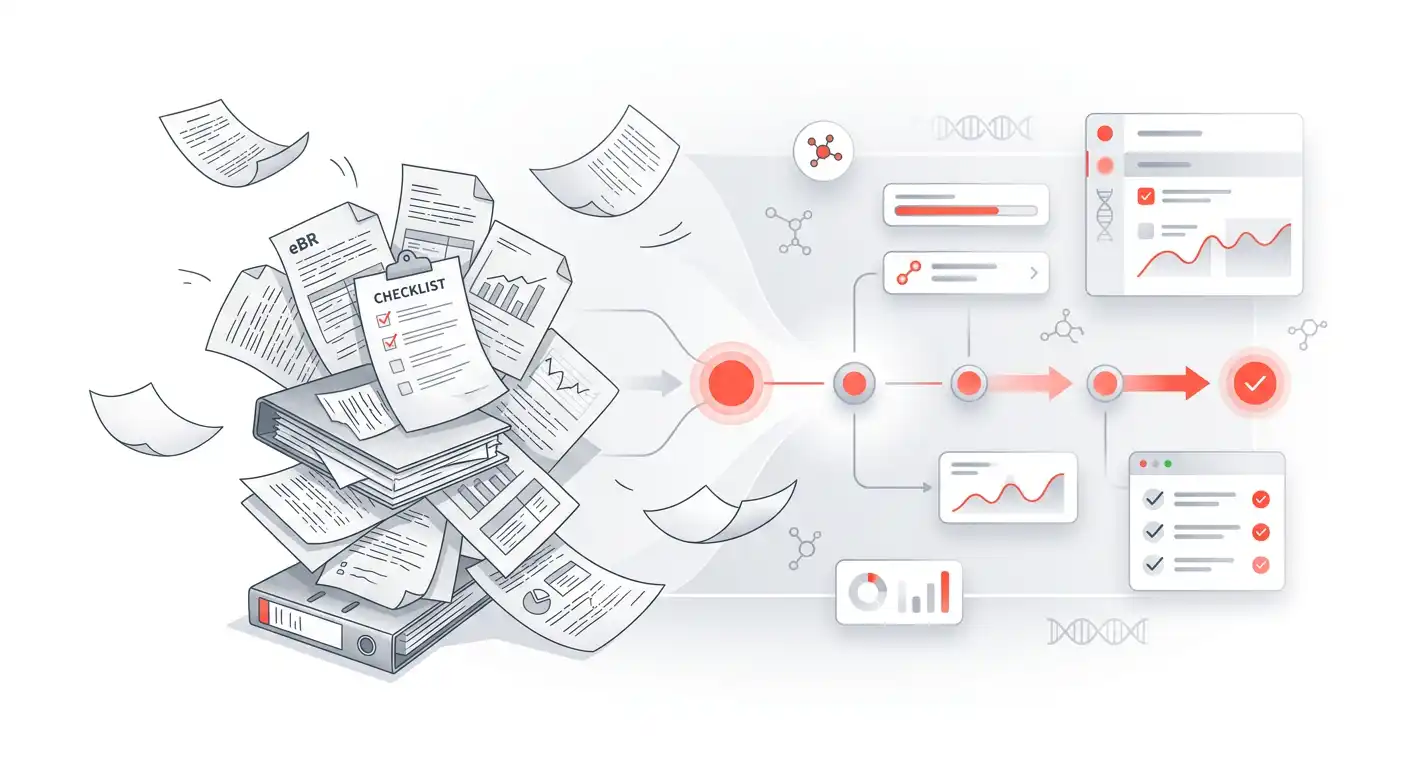
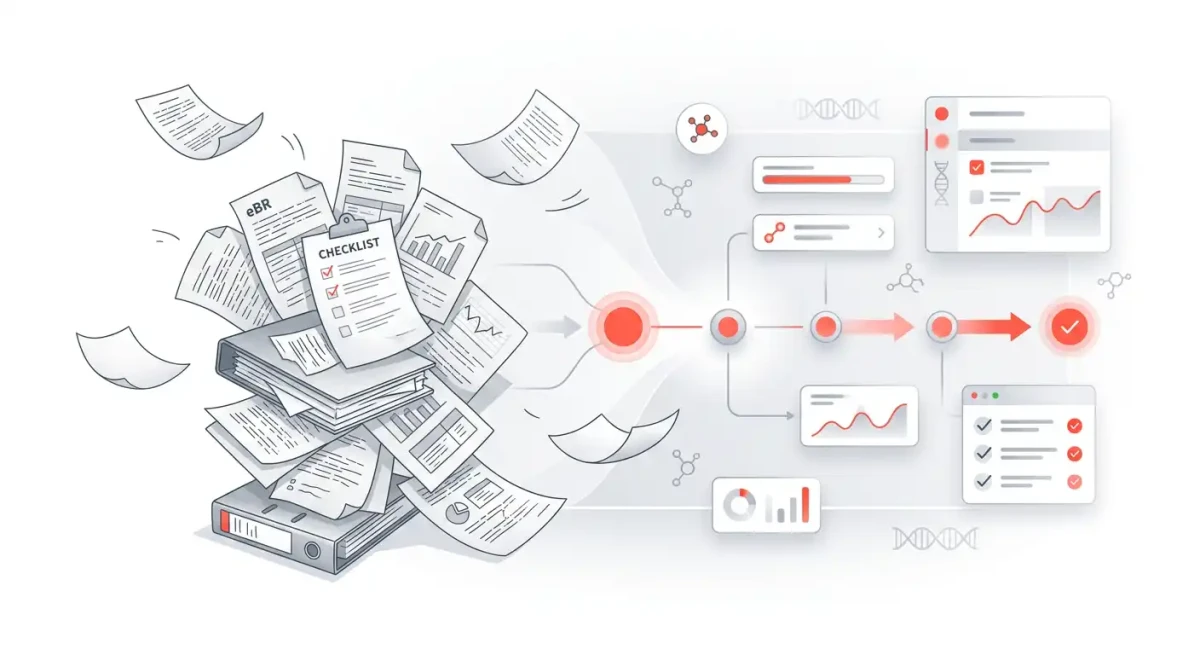
Yes — we're featured in phpro. And most importantly: we're not only addressing those who are already producing in a fully digital environment. In practice, a large number of pharmaceutical manufacturers — around 60–70% — are still working with paper-based batch documentation. That is exactly why the interview with Andreas Nicklas is worth reading: it explores how to approach the move toward digitalization in a pragmatic way — and why change must never become a bottleneck in the process.
We're featured in phpro!
Whether a company is still fully paper-based, operating in a hybrid environment, or already using eBR/MES, sooner or later the same question comes up: How do I manage changes smoothly within day-to-day GMP operations? Because the real test is rarely the initial implementation of a system — it's what happens afterwards. Processes are adjusted, formulations change, CAPAs lead to updates, and validated workflows need to evolve — without every update turning into a major project. This is exactly where many companies create unnecessary bottlenecks, either because paper-based processes are too slow and error-prone, or because digital systems are too rigid. The interview describes this reality very clearly and in a refreshingly practical way.
It also explains why traditional eBR and MES approaches can quickly become limiting factors in regulated environments — and what it takes to ensure that changes do not escalate into projects every single time. Particularly compelling is the perspective on how to bring GMP compliance, adaptability, and operational efficiency together instead of treating them as conflicting priorities. In the interview, Andreas shares a practical example from an internationally active life sciences company where a high level of change effort has a direct impact on costs, time-to-value, and continuous improvement.
For us at anic GmbH, this is a core topic: digitalization only delivers real value when it not only maps processes digitally, but also makes operational changes easy and secure to implement — without having to rebuild everything from scratch each time. Or, put simply: change must become routine, not the exception.